Water Damage in Orange County: First 24 Hours Checklist
Water Damage in Orange County and Riverside County: What to Do in the First 24 Hours
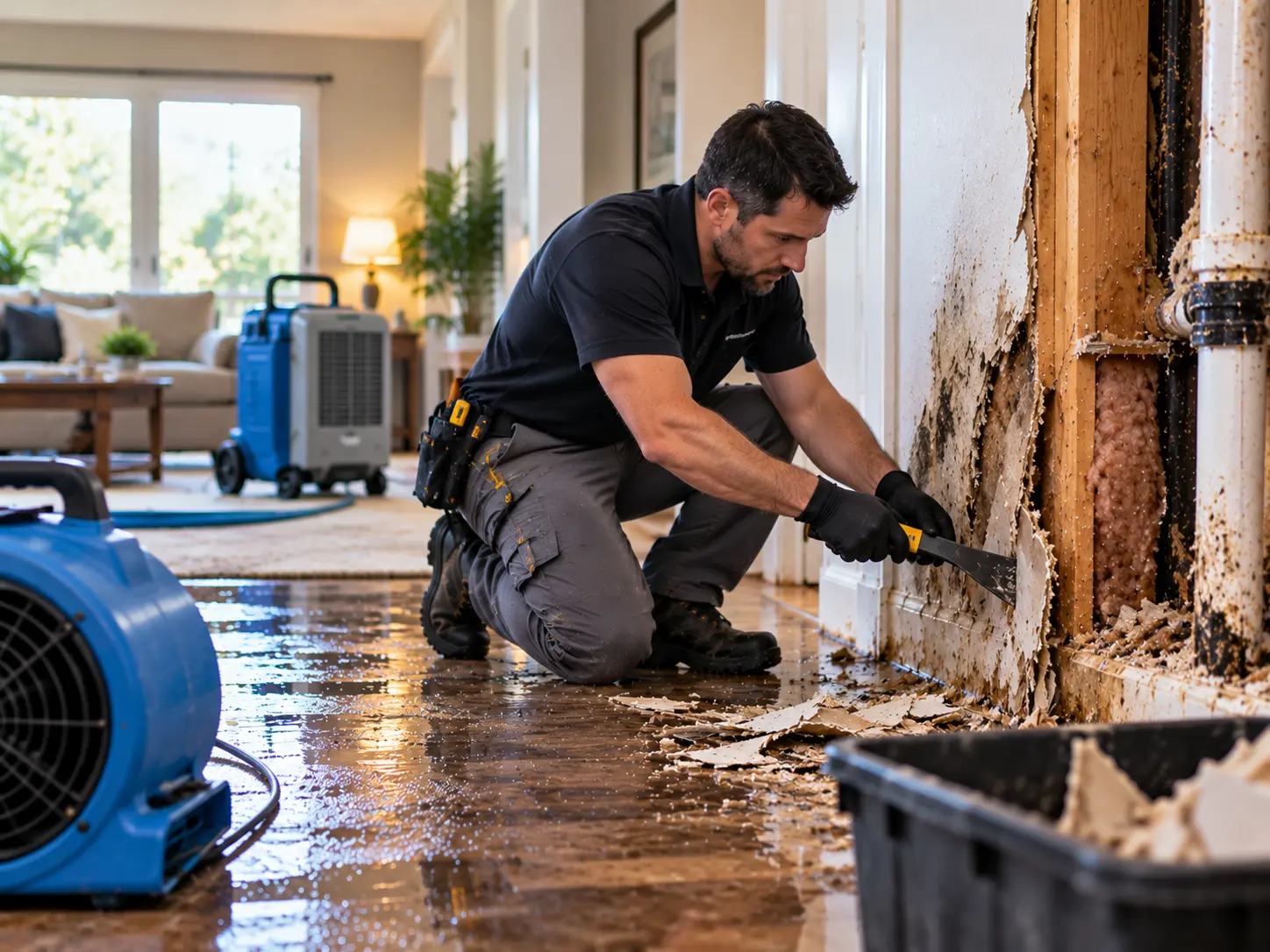
A pipe bursts overnight. A water heater gives out. A washing machine hose lets go while no one is home, or rain finds a weak spot in the roof. If you own or manage property in Orange County or Riverside County, what you do after water damage in the first 24 hours can limit how far the damage spreads.
Water rarely stays where you first see it, so the order of your steps matters. This guide covers the first 15 minutes, the first hour and the rest of the first day, plus what to avoid and when to call for help.
If water is spreading and you need help now, call (855) 838-7737.
The First 24 Hours at a Glance
Get everyone to safety and stay out of any water near electricity.
Stop the water at the source, but only if you can do it safely.
Photograph and video the damage before you move anything.
Call a plumber for the repair and your insurance carrier as appropriate.
Call a restoration company if water has spread beyond a small, contained area.
Get the water out and start drying, ideally within 24 to 48 hours.
Keep damaged items you can until they have been documented.
What to Do in the First 15 Minutes
Safety first: protect people before property.
Stay away from electrical hazards. Do not walk into standing water if outlets, cords, appliances or the electrical panel may be wet. Turn off power at the breaker only if the panel is dry and you can reach it without stepping in water. If you cannot, call your electric utility or an electrician from a dry spot.
Stop the water if it is safe. Closing a shutoff valve at the fixture, the appliance or the main line is fine. Do not cut, dismantle or repair pipes yourself. That belongs to a plumber.
Keep people and pets out. Wet floors are slippery, and water from a sewage backup, an overflowing toilet or outdoor flooding can carry contaminants.
Stay clear of bulging or sagging ceilings. A ceiling holding water can fail suddenly. Keep people out from under it and do not turn on lights or fixtures below it.
What to Do During the First Hour
Document everything before you move anything. Take photos and video of each affected room, the walls, ceilings and floors, the belongings and the source of the water. This record helps with insurance and with planning the repair.
Move belongings only if it is safe. Lift small items, electronics, papers and rugs to a dry spot. Do not risk a fall or an injury to save property.
Call the right people. A plumber can fix the source. If the loss is more than a small, contained spill, a water damage restoration company can handle extraction and drying. Review your policy and contact your insurance carrier as appropriate. Coverage depends on your policy and the circumstances of the loss, and decisions are made between you and your carrier.
What to Do During the First 24 Hours
Once the source is stopped and the damage is documented, the goal is to get the water out and the structure dry. The right response depends on where the water came from, which materials got wet and how far it traveled.
Remove standing water. Towels and mops handle only small amounts. Restoration crews use pumps and extraction equipment for larger volumes. Household vacuums are not built for standing water and can create an electrical hazard.
Find the moisture you cannot see. A floor or wall can feel dry while moisture stays trapped in a wall cavity, under flooring or inside a cabinet. Moisture meters and thermal imaging cameras are standard industry tools for locating wet materials, and readings help show where drying is needed.
Dry the structure, not just the surface. Professional drying typically uses air movers and dehumidifiers to pull moisture out of materials. Fans alone do not dry wall cavities or subfloors.
Know what kind of water you have. Restoration professionals sort water into categories. Clean water comes from a broken supply line or appliance. Gray water carries some contamination, such as an overflowing washing machine or dishwasher. Black water, such as sewage or rising floodwater, is seriously contaminated. Clean water can become contaminated if it sits, and sewage or floodwater is not a do-it-yourself cleanup.
Watch the clock. The U.S. Environmental Protection Agency (EPA) advises drying water-damaged areas and items within 24 to 48 hours to prevent mold growth. Read the EPA's guidance on mold and moisture.
After the First 24 Hours
Drying often continues for several days, depending on the materials, how far the water spread and the humidity. Technicians recheck moisture readings until materials are dry. Repairs such as replacing drywall, insulation or flooring generally come after the structure is dry.
What Not to Do After Water Damage
Do not use electrical equipment in wet areas. Water and electricity can cause shock or fire.
Do not use a household vacuum on standing water. It is not designed for it and creates an electrical risk.
Do not walk through water that may be contaminated. Sewage and floodwater can carry bacteria and other contaminants.
Do not assume dry-looking means dry. Moisture can remain behind surfaces for days.
Do not throw out damaged items before documenting them. Keep them when you can so your adjuster can see them.
Do not rely on fans alone. They move air across surfaces but do not dry wall cavities or subfloors.
Do not tear out or sand wet materials in an older home without caution. Some older materials may contain asbestos or lead paint, so have them tested first.
Do not wait days on significant water. Materials that stay wet are more likely to be damaged, and mold can grow.
When to Call a Water Damage Restoration Professional
Not every spill needs a restoration company. If you wipe up a small spill on a hard floor and dry it completely, you can probably handle it yourself.
Call a professional when:
Water has reached more than one room
Walls or ceilings are wet
Carpet, wood, laminate or other flooring is soaked
Water is standing and has not drained
The water came from a sewage backup or from a source you cannot identify
You suspect moisture is hiding in walls, floors or cabinets
You are not sure how long things have been wet
Veterans Restoration is a family-owned, veteran-owned and operated company and an Institute of Inspection, Cleaning and Restoration Certification (IICRC) Certified Firm. We respond to water, fire, smoke, mold, sewage and other property damage 24/7. For water damage, our process runs from initial inspection and moisture mapping through mitigation, documentation, contents handling and reconstruction when materials need repair or replacement. You can see how that works on our professional water extraction and drying page.
We can also provide photographs, moisture readings, scopes and restoration documentation to support communication with your carrier or adjuster, and we use Xactimate for estimating. If you are weighing next steps on a claim, our insurance claim support page explains more. Coverage decisions remain between you and your insurance carrier.
If water has spread beyond one room or you are unsure how far it went, call us at (855) 838-7737 and tell us what happened.
Water Damage in Orange County and Riverside County, Los Angeles County and San Bernardino County.
We focus on property owners in Orange County and Riverside County, and we also serve Los Angeles County and San Bernardino County, including the cities within all four.
Whoever you call, have this ready:
The property address
Where the water came from and when it started
Whether the source has been stopped
Whether the power is off
Your photos and videos
Your insurance carrier's name and your policy number
Depending on your situation, you may also need to tell someone else:
Renters: your landlord or property manager, so they can shut off shared lines and coordinate repairs.
Condo and multi-unit owners: your HOA or building management, since water can affect neighbors and shared systems.
Suspected main line problem: your water utility, which can shut off service at the street.
Frequently Asked Questions
How quickly should water damage be addressed?
As soon as it is safe. The EPA advises drying water-damaged areas and items within 24 to 48 hours to prevent mold growth, so extraction and drying should start on the first day.
How long does professional drying take?
Drying often takes several days. The actual time depends on the materials affected, how far the water spread, the humidity and the equipment used. Technicians recheck moisture readings to confirm when materials are dry.
How much does water damage restoration cost?
Cost depends on the extent of the damage, the type of water, the materials affected, how long drying takes, the equipment needed, access to the area and whether rebuilding is required. Because those factors vary, an on-site assessment is the most reliable way to understand your situation.
Does homeowners insurance cover water damage?
It depends on your policy and the cause of the loss. A sudden pipe failure, a long-term leak and flooding can be treated differently, so review your policy or ask your agent. Document the damage and contact your carrier promptly.
Can water damage lead to mold?
Yes. Materials that stay wet can support mold growth, which is why drying quickly matters. The EPA advises drying water-damaged areas within 24 to 48 hours. If you have health concerns, talk with a medical professional.
When should I call a restoration company?
Call when water has spread beyond a small, contained area. That includes water in more than one room, wet walls or ceilings, standing water, sewage or an unknown source, or any concern about hidden moisture. If you are unsure, call and describe what you see.
Need Help With Water Damage?
If you are looking at wet walls, soaked flooring or a loss you cannot size up, let us take a look. Call Veterans Restoration at (855) 838-7737 or request a quote online.